Riccardo Freddo: Building Cultural Value Through Institutional Strategy
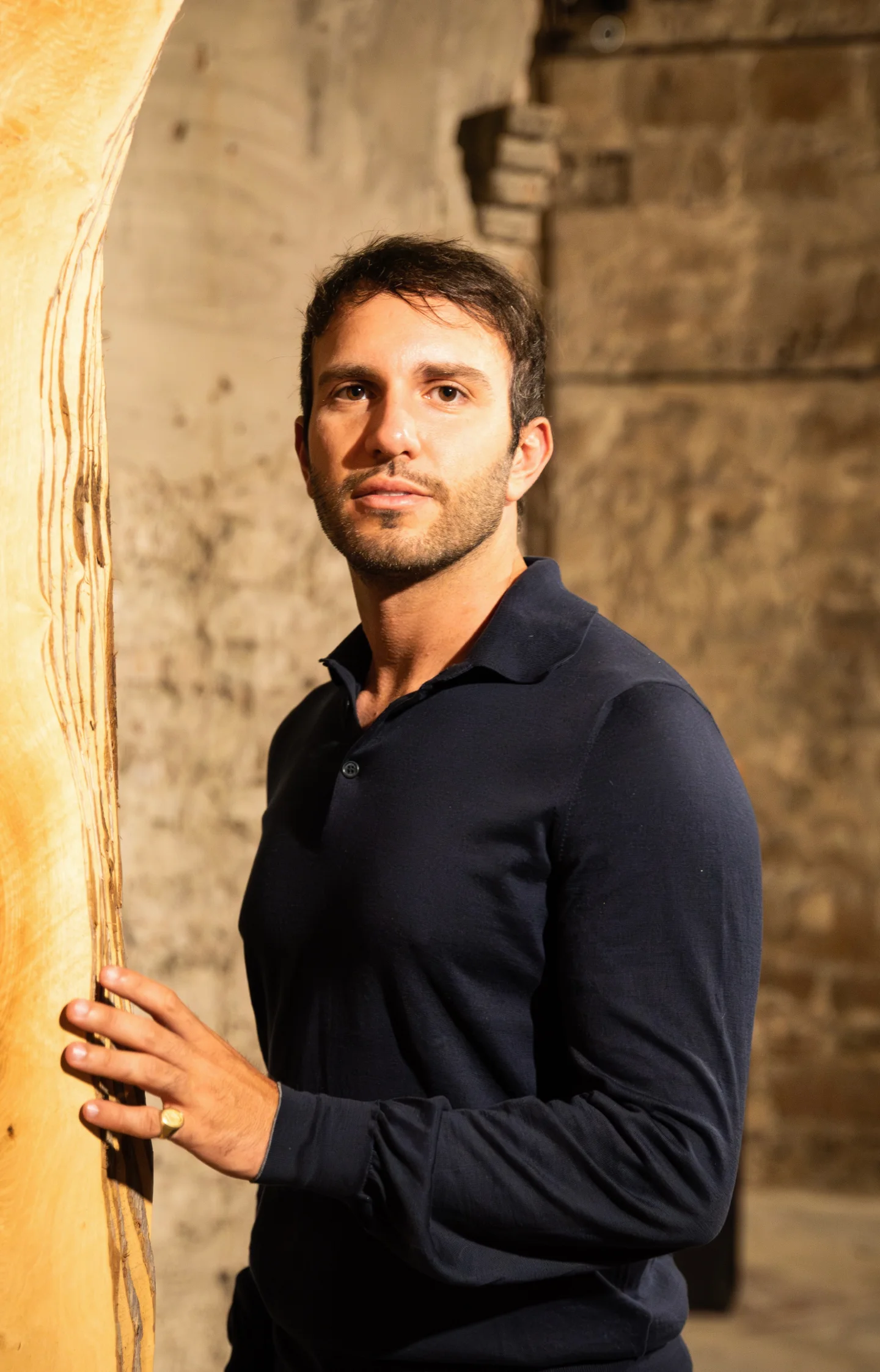
As the relationship between contemporary art, institutions, and the market continues to evolve, Riccardo Freddo has built his career around one central belief: lasting artistic value is created through long-term cultural strategy rather than commercial momentum alone. He focuses ondeveloping artists' carriers through museum collaborations, institutional partnerships, and international collector engagement.
Having organized and produced more than twenty museum and institutional shows, Freddo has led projects including an exhibition at the MAO Ca' Pesaro during the 2026 Venice Biennale and a landmark presentation at the National Etruscan Museum of Villa Giulia, where Keita Miyazaki was invited to create a site-specific installation in the museum's Roman Nymphaeum for the first time in more than five centuries. In August 2026, he will organize a major show in Museo Palazzo Pubblico in Siena and present Teodora Axente's Palio, one of Italy's most celebratedhistoric traditions.
In this conversation, Freddo reflects on the evolving role of galleries, institutional strategy, cultural diplomacy, and why the future of the art world will be shaped by trust, expertise, and meaningful cultural partnerships.
CDH Talks: In recent years, we’ve seen a growing overlap between the art world and luxury ecosystems. Do you think this convergence strengthens contemporary art, or does it risk reshaping its autonomy?
Riccardo Freddo: As Horace wrote, "Est modus in rebus"; there is a measure in all things. Luxury can provide artists and institutions with resources, visibility, and opportunities that would otherwise be difficult to achieve. The challenge is ensuring that cultural value is never dictated by commercial value. When the relationship is balanced, luxury can amplify artistic voices. When branding begins to drive artistic discourse, the autonomy of art is inevitably weakened.
CDH Talks: From your perspective, what is the role of galleries today beyond representation and sales? Are they becoming cultural institutions in their own right?
Riccardo Freddo: Absolutely. The role of a gallery today is to build the conditions for an artist's long-term relevance. Sales are essential, but they are only one part of a much broader strategy that includes museum collaborations, institutional acquisitions, publications, research, and public programmes. The strongest galleries are becoming cultural platforms that connect artists with institutions, scholars, collectors, and wider audiences. Their responsibility is not simply to sell works, but to help shape an artist's place in art history.
CDH Talks: How do you navigate the balance between commercial viability and curatorial integrity when working with artists and collectors?
Riccardo Freddo: I believe the market tends to reward cultural conviction. Commercial success is often the consequence of meaningful projects rather than their objective. Collectors who recognise quality early are investing not only in artworks, but in an artist's long-term vision. My role is to build trust by presenting projects that have intellectual integrity and institutional relevance. Sustainable markets are built through credibility, not speculation.
CDH Talks: Cultural Diplomacy is increasingly happening outside traditional state institutions, often through private actors. Do you see galleries and art advisors as part of this new diplomatic infrastructure?
Riccardo Freddo: Very much so. Galleries, foundations, collectors, and advisors increasingly act as cultural bridges, creating connections between artists, institutions, and audiences across different countries. They help ideas circulate internationally. However, museums and public institutions remain the most important spaces for critical debate and historical validation. The private sector is most effective when it complements, rather than replaces, public cultural institutions.
CDH Talks: What do you think defines ‘’value’’ in contemporary art today - has it shifted more toward narrative and context than purely aesthetic or material criteria?
Riccardo Freddo: Value has never been just a price. The most important works are those that move us, challenge our assumptions, or change the way we see the world. Narrative and context have become increasingly important because they help us understand why a work matters, but they should never replace artistic quality. Ultimately, the greatest value of art lies in its ability to create lasting cultural and human significance. Art belongs to everyone, not only to the market.
CDH Talks: How do emerging markets and new collector geographies reshape the global art ecosystem you operate in?
Riccardo Freddo: They bring new perspectives, new forms of patronage, and new conversations. This makes the art world healthier because it broadens the voices participating in it. I've seen collectors from emerging regions approach art with remarkable curiosity and openness, often looking beyond established market narratives. That diversity creates new opportunities for artists and contributes to a more dynamic global cultural ecosystem.
CDH Talks: There is often a tension between accessibility and exclusivity in the art world. Do you think this tension is productive, or is it something the system still struggles to resolve?
Riccardo Freddo: Art requires time, curiosity, and education, so a certain degree of exclusivity will probably always exist. But exclusivity should never become exclusion. You don't need to be a billionaire to play ameaningful role in the art world. Knowledge, relationships, independent judgement, and genuine curiosity often matter far more than purchasing power. The next generation of collectors will be defined by engagement rather than status.
CDH Talks: To what extent should galleries take responsibility in shaping public discourse around sustainability, ethics, and cultural production?
Riccardo Freddo: They certainly have a responsibility, but these challenges cannot be addressed in isolation. Galleries should work alongside artists, museums, foundations, and public institutions to develop projects that are culturally meaningful and socially responsible. Cultural leadership today is less about speaking the loudest and more about creating partnerships capable of generating lasting impact.
CDH Talks: When you work with artists across different cultural contexts, how do you avoid the risk of aesthetic homogenization driven by global market expectation?
Riccardo Freddo: It starts with representing artists who have a distinct and authentic voice. The role of a gallery is not to adapt artists to the market but to create the conditions for the market to understand them. Authenticity is far more sustainable than trend-following. Respecting different cultural perspectives is precisely what keeps the contemporary art landscape intellectually rich.
CDH Talks: Finally, what do you think the art world is still fundamentally misunderstanding about its own relationship power, prestige, and influence?
Riccardo Freddo: I think the art world sometimes confuses access with wealth. Financial resources can open doors, but lasting influence is built through knowledge, trust, relationships, and sustained cultural contribution. The people who shape the future of the art world are often those who invest time in artists, institutions, and ideas—not simply capital. Prestige should be earned through cultural impact rather than market visibility alone.