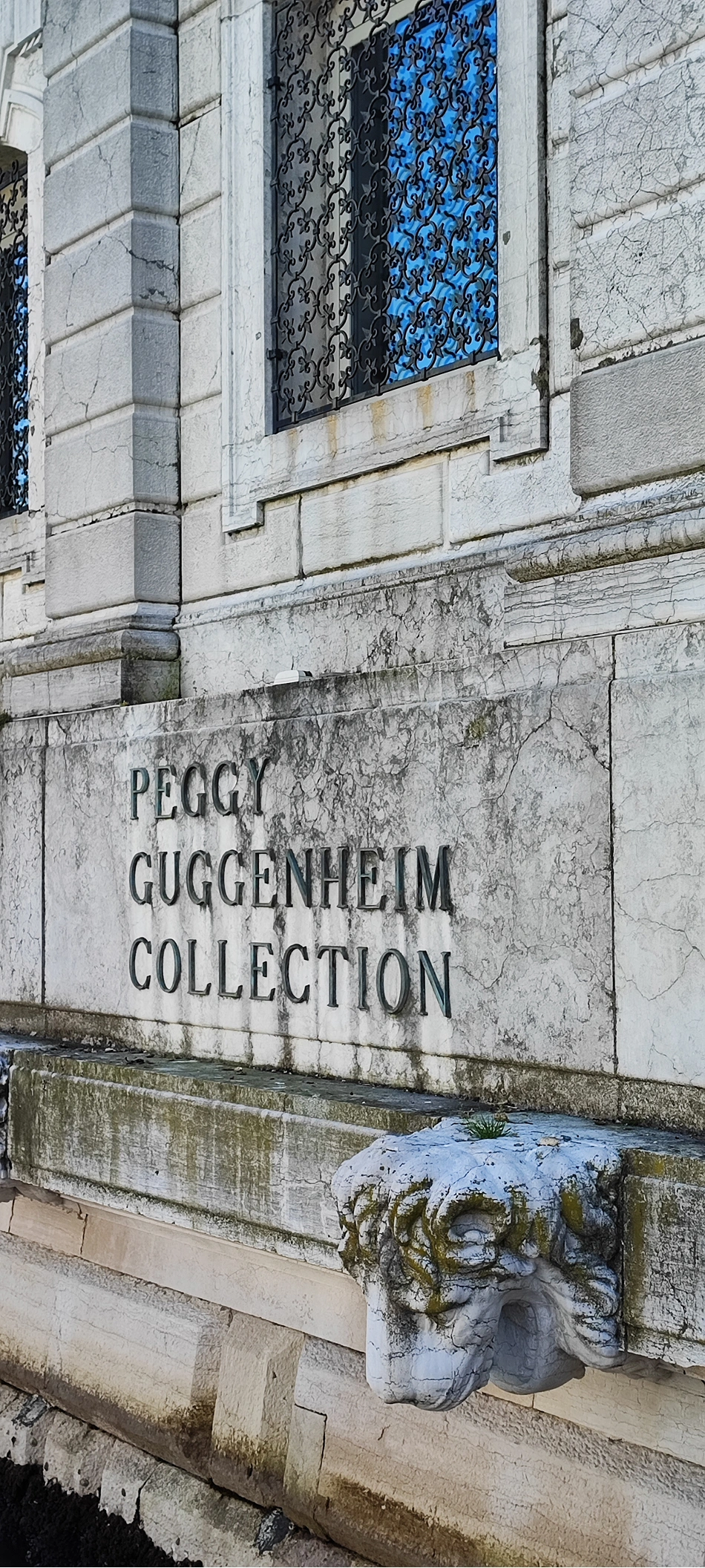
PEGGY GUGGENHEIM COLLECTION: Venice in theirown distinction
In the layered cultural landscape of Venice—a city long defined by heritage, empire, and artistic legacy—the Peggy Guggenheim Collection represents a different kind of power: one rooted not in preservation alone, but in cultural transformation.
For Cultural Diplomacy Hub, this institution stands as a compelling case study of how individual vision can influence global cultural dialogue.
Housed in the understated Palazzo Venier dei Leoni, the museum resists the monumental aesthetics typically associated with European cultural institutions. Instead, it reflects the personality and philosophy of its founder, Peggy Guggenheim—a figure who operated at the intersection of art, politics, and international networks during one of the most volatile periods in modern history.
Her approach was instinctive, yet strategically consequential.
During World War II, Guggenheim’s decision to collect avant-garde works at an unprecedented pace was not merely an act of patronage—it was a form of cultural preservation under threat. By securing works from artists such as Pablo Picasso, Salvador Dalí, Jackson Pollock, and Mark Rothko, she effectively safeguarded and later repositioned the trajectory of modern art within a transatlantic context.
This act carries strong diplomatic implications.
Art, in this sense, becomes more than expression—it becomes a vehicle of soft power.
The turning point came in 1948, when Guggenheim exhibited her collection at the Venice Biennale. At a time when Europe was rebuilding its cultural identity, the introduction of Abstract Expressionism and Surrealism challenged existing artistic hierarchies and signaled a shift toward a more globalized art discourse.
Through this gesture, Venice was not only reaffirmed as a cultural capital of the past, but repositioned as a platform for contemporary international exchange.
Today, the Peggy Guggenheim Collection operates under the Solomon R. Guggenheim Foundation, yet it retains its original essence: a private vision made public, a personal network transformed into institutional influence.
For Cultural Diplomacy Hub, the relevance is clear.
The museum exemplifies how:
- Private actors can shape global cultural narratives
- Art collections can function as instruments of international dialogue
- Cultural spaces can bridge historical legacy with contemporary relevance
In a time when nations and institutions increasingly rely on culture as a means of influence, the Peggy Guggenheim Collection offers a powerful blueprint: one where vision, timing, and network converge to create lasting global impact.
For platforms like Cultural Diplomacy Hub, it serves not only as inspiration—but as a model for action.