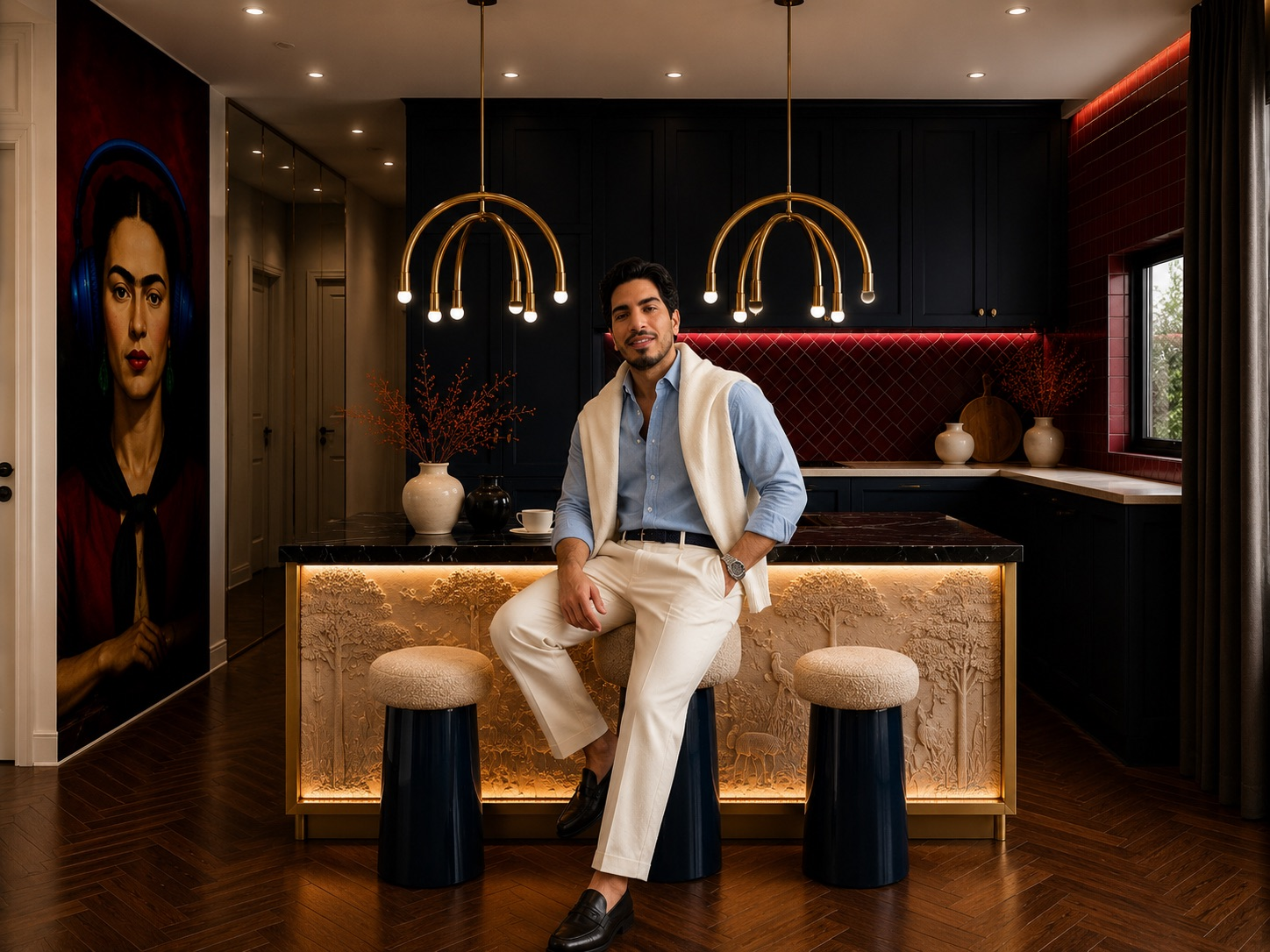
Ahmad Albeik: Luxury should never come at the expense of identity
Interior Design, Cultural Identity, and the New Language of Luxury in the Middle East.
CDH Talks: When you design for clients in Saudi Arabia, the UAE or Qatar, where do you draw the line between responding to global luxury trends and preserving a distinctly Middle Eastern cultural identity?
Ahmad Albeik: Luxury should never come at the expense of identity. I follow global design movements because they inspire innovation, but I never believe in copying them. Every project begins with understanding how my client lives, what they value, and how their culture shapes their everyday life.
Middle Eastern homes are built around values that go far beyond aesthetics. Family, privacy, belonging, and emotional connection to the home are timeless principles. My role is not to replace these values, but to express them through a contemporary design language.
CDH Talks: Some observers argue that contemporary luxury in the Middle East is shifting away from the display of wealth toward the expression of cultural capital and personal identity. Do you recognise this shift in your own work, and what do you think is driving it?
Ahmad Albeik: Absolutely. Today's clients are less interested in proving what they own and more interested in expressing who they are.
Travel, global exposure, and access to design through digital platforms have created a more informed generation. Clients appreciate authenticity, craftsmanship, bespoke design, and spaces with emotional meaning rather than simply expensive materials or recognizable brands.
Luxury has become more personal, and I believe that is a very positive evolution.
CDH Talks: When did you first notice a move away from overt displays of luxury toward a more restrained aesthetic rooted in craftsmanship, heritage and authenticity?
Ahmad Albeik: I began noticing this shift around five or six years ago.
A younger generation of clients started asking different questions. Instead of asking for the most expensive materials, they began asking what would remain timeless, what would age beautifully, and what would continue to feel meaningful years from now.
That shift reflects a more mature understanding of luxury—one that values longevity, craftsmanship, and emotional connection over excess.
CDH Talks: What defines the new language of prestige in the Middle East today? Compared with a decade ago, what do your clients value most now — and what has quietly lost its relevance?
Ahmad Albeik: Prestige today is confidence without excess.
Clients value thoughtful proportions, exceptional craftsmanship, natural materials, custom-made furniture, and lighting that creates atmosphere rather than spectacle.
The desire to impress through extravagance has gradually faded. Today's luxury is quieter, more refined, and ultimately more personal.
CDH Talks: Despite global influences, which elements of Middle Eastern heritage do your clients see as non-negotiable within their homes? What are they most committed to preserving?
Ahmad Albeik: The strongest value is the sense of belonging.
My clients want homes that reflect their identity and strengthen their connection to family and culture. Privacy remains essential, but beyond that, they want spaces where generations can gather, traditions continue naturally, and memories are created.
These emotional values remain far more important than any passing design trend.
CDH Talks: Are there traditional architectural or decorative elements that you believe remain timeless, regardless of changing trends? What gives them their continued relevance?
Ahmad Albeik: Absolutely.
Elements such as arches, natural stone, handcrafted details, and balanced architectural proportions continue to endure because they create familiarity, warmth, and emotional comfort.
Timeless design is not about repeating history. It is about respecting heritage while expressing it in a way that feels relevant today.
CDH Talks: Many contemporary residences are now built around private art collections rather than the other way around. How has the relationship between art and interior design evolved in the region, and what does this say about today's collectors?
Ahmad Albeik: Art is no longer treated as the final decorative layer—it has become part of the design process itself.
Many clients collect art that reflects their journeys, culture, and personal stories. Rather than finding a place for artwork after the home is complete, we often shape the space around those pieces.
This reflects a deeper understanding of luxury—one that values meaning over decoration.
CDH Talks: Interior design often speaks before its inhabitants do. Can a well-designed space function as a form of cultural diplomacy—communicating values, heritage and identity without a single word being spoken?
Ahmad Albeik: Without question.
A thoughtfully designed home communicates values long before a conversation begins. It expresses respect for craftsmanship, appreciation of heritage, the importance of family, and the identity of the people who live there.
Design has a unique ability to connect cultures because beauty, emotion, and human experience are universal languages.
CDH Talks: If you could introduce just one element of Middle Eastern interior culture into homes around the world, what would it be—and what philosophy of living would it carry with it?
Ahmad Albeik: I would introduce the philosophy of belonging.
In the Middle East, a home is never just a beautiful space. It is a place where people feel connected—to their family, their memories, their culture, and ultimately to themselves.
I believe true luxury is not measured by what a home contains, but by how deeply it makes people feel that they belong.
Design is not about creating beautiful spaces. It is about creating places where people feel they truly belong. Because when a space gives you a sense of belonging, it becomes part of your identity—and that is a luxury no trend can ever replace.